in curiosito dall'articolo della nuova sardegna del 12\1\2026 che trovate sotto ho cercato onde evitare screen shot e le vostre lamentele , ho trovato su quest articlo bilingue https://italoamericano.org/ da cui ho preso la prima foto

che propongo sia in inglese ( per far contenti. i lettori ( stranieri ) sia in italiano
Italian science leads on: Ciriaco Goddi and the crew who photographed a black hole
By barbara minafra | May 9, 2019
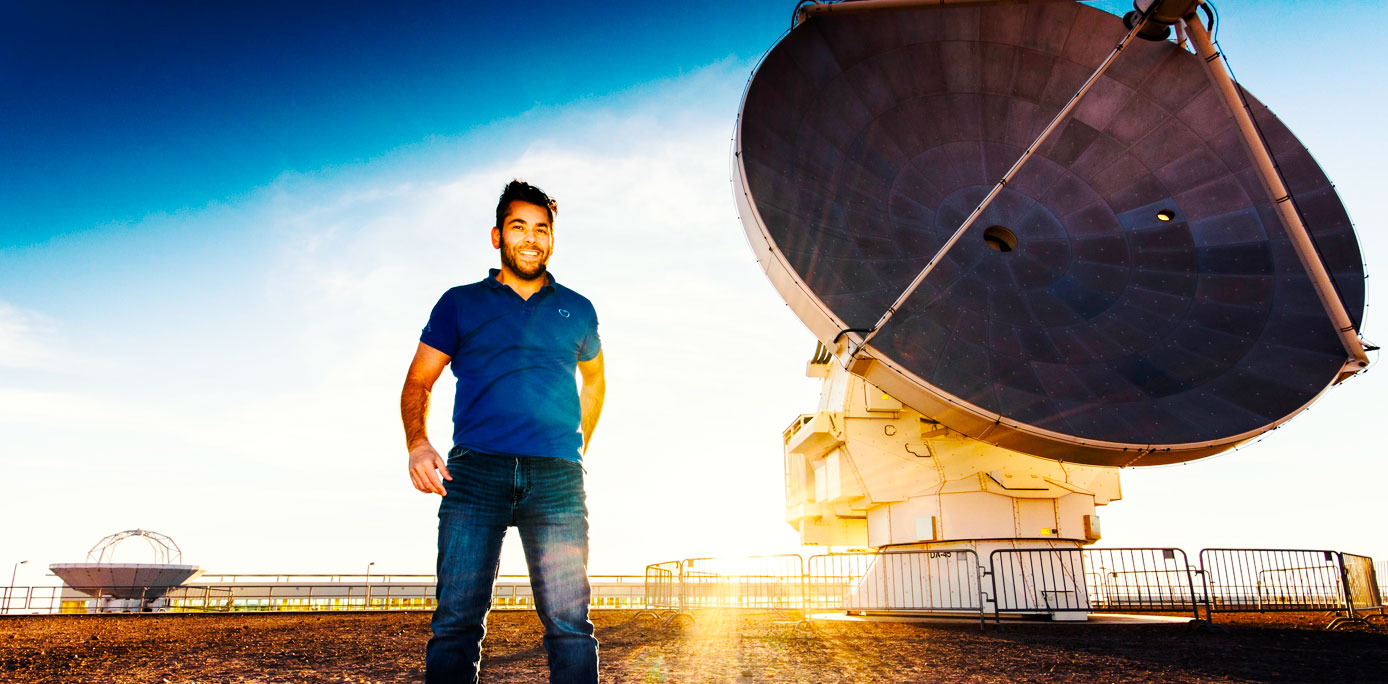 Ciriaco Goddi is in charge of the BlackHoleCam project, that managed to take the time-defining photo of a black hole in recent weeks @ Ciriaco Goddi
It is considered the photo of the century. He has not (yet) won the Pulitzer but has shown Einstein’s General Relativity. With two super-computers, one at Boston’s MIT, and a network of radio telescopes from 12 to 30 meters in diameter on the various continents, it immortalized a piece of science fiction: the horizon of events, the distortion of space-time, the shadow of a black hole.
A Nobel Prize project.
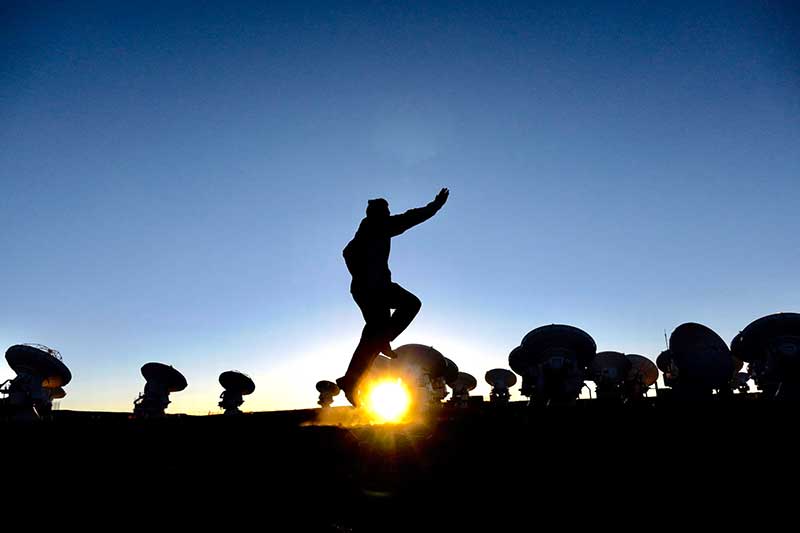
L’Italo-Americano interviewed the Sardinian astrophysicist in charge of the BlackHoleCam project. Ciriaco Goddi, 43, degree and PhD in Physics at the University of Cagliari, three years at Harvard, Germany, and in Holland since 2012. All the way to EHT: Event Horizon Telescope, the international project that measures the enormous mass of the black hole at the center of a galaxy 55 million light years away from Earth. Italy participates with several scientists, the National Institute of Astrophysics (Inaf) and the National Institute of Nuclear Physics (Infn).
What types of emotions, personal and scientific, do you feel when looking at this part of the universe?
During the past weeks, I have understood that a photo of a black hole can give emotions to everyone, even those who are not experts in science or astrophysics.
As researchers, we spent decades waiting for this, so ours is a different, more personal type of joy, as we see our dream come true. But even I, who have worked for years on this project, feel a unique emotion when I look at that image, knowing it is a ring of matter and light shaped by space-time deformation, a consequence of the very strong gravity associated with the massive object at its center: a black hole. Not a simulation or an animation — we have seen thousand of those — but the very shadow of a black hole, a place from which not even light can escape, just as Einstein had predicted.
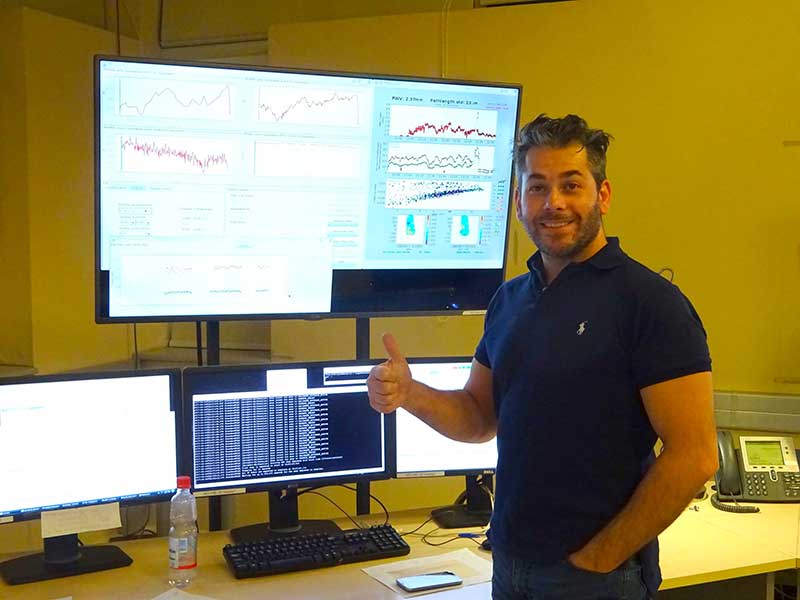
Ciriaco Goddi in his office © Ciriaco Goddi
What can you see beyond that black circle wrapped in incandescent light?
Looking at the image, one can imagine what happens to the plasma orbiting around the black hole, rotating at speeds close to that of light, accelerating and gradually descending the spiral staircase that leads it beyond the event horizon, where it disappears for ever, swallowed by the black hole itself.
It’s almost like one can feel (and not just see) the luminous eddy of matter that coils around until it disappears into the deep black of that hole.
Someone defined the event horizon the “gates of eternity.” It is a beautiful thought, it gives the chills. And the awareness that, from now on, the event horizon is no longer just an immaterial mathematical concept — the mathematical solution of a theory — but has become a physical object, observable and measurable by scientific method, is a huge achievement for us astrophysicists, and an exciting idea in general.
Even if we don’t know what happens in there, the mere fact of being able to see it with our own eyes makes science fiction dreams less surreal.
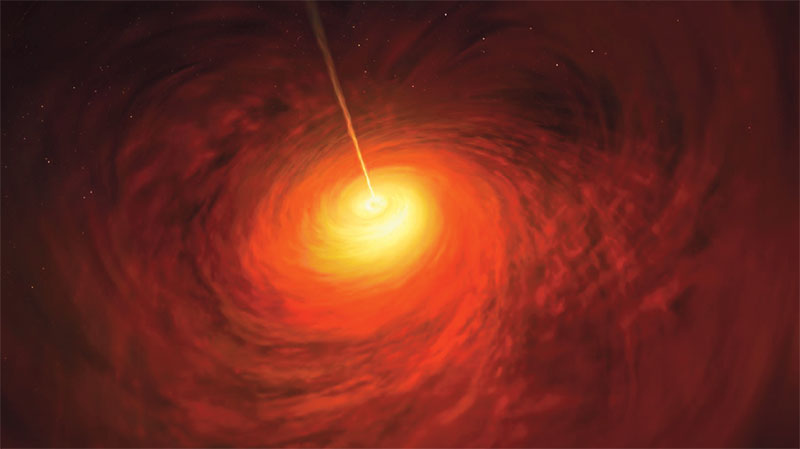
The black hole at the center of M37 @INAF
Your contribution is a “great step of humanity.” What does it feel like to have helped create a new page in the history of astrophysics?
When we started, we were aware of the difficulties. We were pushing the limits of current technology, but at the same time we were sure we would succeed. It was a long journey, an emotional one, at times.
This result comes more than 100 years after the publication of Einstein’s Theory of General Relativity and Schwarzschild’s mathematical solution that predicts the singularity and existence of black holes (at least mathematically). After the pioneering studies of the 1970s, which used the first simulations to predict black holes’ appearance (if they could have been observed), in 2000 we had the intuition that observing the super-massive black hole at the center of the Milky Way could have been possible thanks to the technology available.
Thoughts went in particular to the very-long baseline interferometry technique (VLBI) used by EHT, which was followed by a successful technological development (started about 20 years ago) aimed at applying this technique to high radio frequencies (used by EHT). Projects began being developed in the United States and Europe around 4-5 years ago, and they were dedicated exclusively to this goal. They developed first independently and then jointly, with the first global observation campaign taking place in 2017. There was a scrupulous work on the elaboration of the data collected in the last 2 years, which finally allowed us to see what seemed invisible: the black hole. Now we know what it looks like. It took a long time, but we’ve finally succeeded. It’s incredible.
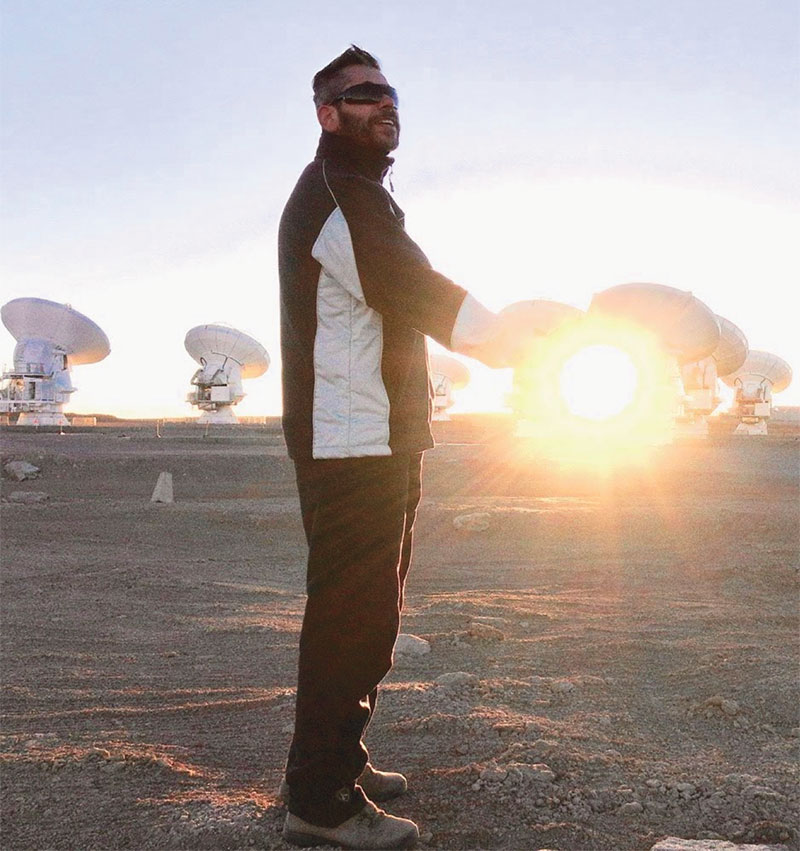
Italy participates with several scientists, the National Institute of Astrophysics (Inaf) and the National Institute of Nuclear Physics (Infn). © Ciriaco Goddi
An enormous effort.
I can say that the image of the black hole at the center of the M87 Galaxy is, simultaneously, a great success of scientific research and an exciting representation of something we could only imagine until now. The success of research lies in a new proof of Einstein’s Theory of Relativity, but above all it is a further confirmation of the impact international collaboration and large infrastructures can have on the future of human knowledge.
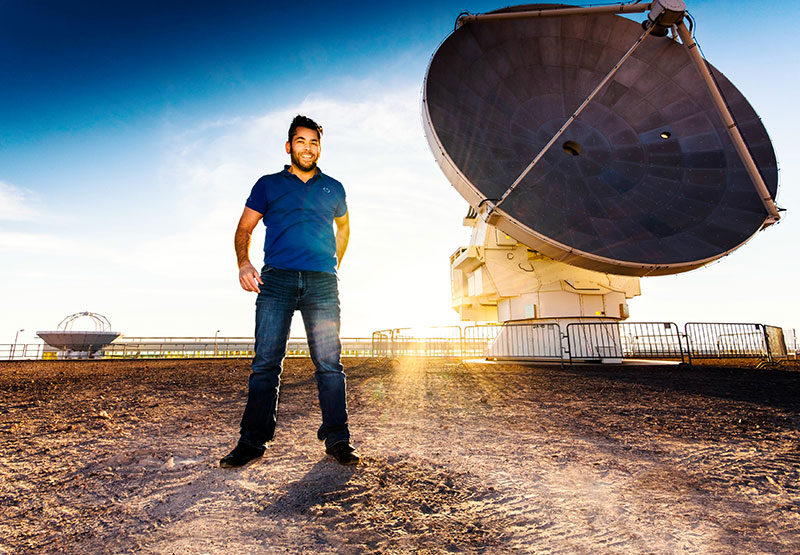
Event Horizon Telescope, the international project that measures the enormous mass of the black hole at the center of a galaxy 55 million light years away from Earth © Ciriaco Goddi
What was the role of Italian scientists in this project?
Luciano Rezzolla (University of Frankfurt), one of the 3 PIs of BHC, and I, have been involved since 2014. Another researcher, Mariafelicia de Laurentis, full professor at the University of Naples and affiliated with Infn, joined the Frankfurt group as an expert on gravitation theories in 2016. In 2018, we introduced to BlackHoleCam two researchers from the Italian ALMA Regional Center node (INAF – IRA in Bologna), Elisabetta Liuzzo and Kazi Rygl, who became members of the EHT Consortium through their affiliation with BHC.
Then we should also include Violette Impellizzeri, who works in Chile for Atacama Large Millimeter Array (ALMA), the largest terrestrial radio telescope, who contributed decisively to the collection of data necessary to obtain the image of the supermassive black hole at the center of M87. As an astronomer and as responsible for the calibration of ALMA as a VLBI station, I carried out all the observing campaigns in the Atacama desert in Chile. With Violette, we spent many nights watching M87 with ALMA. Although not a full member, Violette is a co-signer of the article published in the Astrophysical Journal, which reported the image.
From now on we can talk about a new era of research. What does this exactly mean?
The certainty of being part of an epochal change, a passage between “before” and “after” is extremely exciting. We can really say that, from today, physics are no longer the same. What until yesterday was only an immaterial mathematical concept, a mathematical solution to a theory, has now become a physical object, observable and measurable by scientific method. A sort of laboratory where we can carry out experiments about gravity, to which we didn’t have access before. This is what black holes are now.
Our hope was, if we had ever succeeded in creating the first image of a black hole, that this photo could end up in textbooks. I hope this will really happen. History books will be divided between the times before and after this image was taken.
The photo proved human theories — human imagination — right…
This experiment —its result — could be the beginning of a new era. For the first time we see the event horizon and we can study general relativity on a scale and regime unimaginable before. And the most surprising aspect is that everything we see is perfectly in agreement with the prediction provided by the Theory of Relativity. Einstein also passed this test with tremendous success! Incredible and excellent, Einstein, who initially did not believe in the concept of black holes and had to struggle a bit with the idea of the event horizon. Today, after a hundred years, we showed it is a reality of the universe. This would have been absolutely incredible to him. Another great scholar of black holes, Stephen Hawking, died too early to see this result, but he would have had the same emotional reaction we had in finally seeing the ultimate limit of space and time. This is really the golden decade to study black holes.
What’s inside a black hole?
We don’t know, since we can’t access it.
Perhaps there is matter that cannot be compacted, or perhaps matter has already been entirely concentrated into one sole entity, just as it happened for the Big Bang (exciting no?),and has been “converted” into a curvature of space-time … who knows!
Speculating is free, since nobody can come back and tell us what’s in it !
What about Einstein: was his theory correct or did your observations brought some corrections to it?
The short answer is: yes, Einstein was right, at least for now.
Overall, the observed image is consistent with the expectations for the shadow of a rotating black hole with a spin different from zero —also known as Kerr black hole — as foreseen by the Theory of Relativity. However, I can say that the observations made are not consistent with many of the alternatives to Kerr black holes proposed by previous models.
It’s still science fiction today, but could it be possible to open, sooner or later, a door in time? And is the fantasy-scientific idea of using black holes as “hyperspace slings” in any way theoretically possible?
For the moment, space travel is only possible within the Solar System. But it is also true that some mathematical solutions to Einstein’s equations (and to other theories of gravity) seem to suggest the possibility of traveling between any two points in space and time. This is a direct consequence of the space-time curve around an intense gravitational field, as predicted by Einstein’s relativity.
The most representative case is that of the so-called Wormhole, which could be described as a tunnel, a “shortcut” in space-time. In addition to the three spatial dimensions, Einstein’s equations include time as the fourth dimension: it follows that the presence of a black hole also curves time, and thus allows time travel. These, however, are hypothetical considerations. I mean, here we go into science fiction. In fact, the Wormhole is the preferred way for a writer or a science fiction director to explain space travel. Think of the 2014 Hollywood movie Interstellar, with Matthew McConaughey playing a NASA astronaut who has the task of exploring 3 planets in another galaxy with the hope that one can host humanity. And how does it get there? Through a Wormhole that allows you to cut through the 26.000 years you’d need to get there … in short, McConaughey would have died a long time before arriving!
What is your next research project?
I will certainly continue to work on this project: we are only at the beginning. We have yet to fully study another black hole, the one at the center of the Milky Way, Sagittarius A*; the magnetic fields originated by polarized light from M87 and Sgr A *; to compare images from different eras. One of the next steps of the EHT project will be to move from a static image to a movie.
Starting from 2020, we would like to add new telescopes to the network, particularly in Arizona, France, Argentina and maybe Africa. Since the Earth has already been used to its full capacity, we would like to go into space and use the VLBI technique with satellites, which would allow us to go beyond the earth’s dimensions as the diameter of our virtual telescope. Going into space would allow to observe shorter wavelengths or longer frequencies and have even higher resolutions.
In short, in the next decade we will still be very busy with BlackHoleCam, with the aim of improving our measurements and testing even more precisely the general theory of Einstein’s relativity.
E' considerata la foto del secolo. Non ha (ancora) vinto il Pulitzer, ma ha mostrato la Relatività Generale di Einstein. Con due supercomputer, uno al MIT di Boston, e una rete di radiotelescopi da 12 a 30 metri di diametro nei vari continenti, immortalò un pezzo di fantascienza: l'orizzonte degli eventi, la distorsione dello spaziotempo, l'ombra di un buco nero.
Un progetto da premio Nobel.
L'Italo-Americano ha intervistato l'astrofisico sardo responsabile del progetto BlackHoleCam. Ciriaco Goddi, 43 anni, laureato e dottorato in Fisica presso l'Università di Cagliari, tre anni ad Harvard, Germania, e in Olanda dal 2012. Fino a EHT: Event Horizon Telescope, il progetto internazionale che misura l'enorme massa del buco nero al centro di una galassia a 55 milioni di anni luce dalla Terra. L'Italia partecipa insieme a diversi scienziati, l'Istituto Nazionale di Astrofisica (Inaf) e l'Istituto Nazionale di Fisica Nucleare (Infn).
Che tipo di emozioni, personali e scientifiche, provi guardando questa parte dell'universo?
Nelle ultime settimane, ho capito che una foto di un buco nero può suscitare emozioni in tutti, anche in chi non è esperto di scienza o astrofisica.
Come ricercatori, abbiamo passato decenni ad aspettare questo, quindi la nostra è una gioia diversa, più personale, mentre vediamo il nostro sogno avverarsi. Ma anche io, che ho lavorato per anni a questo progetto, provo un'emozione unica quando guardo quell'immagine, sapendo che è un anello di materia e luce modellato dalla deformazione dello spazio-tempo, conseguenza della forte gravità associata all'oggetto massiccio al suo centro: un buco nero. Non una simulazione o un'animazione — ne abbiamo viste migliaia — ma l'ombra stessa di un buco nero, un luogo da cui nemmeno la luce può uscire, proprio come aveva previsto Einstein.
Ciriaco Goddi nel suo ufficio © Ciriaco Goddi
Cosa puoi vedere oltre quel cerchio nero avvolto da una luce incandescente?
Guardando l'immagine, si può immaginare cosa succede al plasma che orbita attorno al buco nero, ruotando a velocità vicine a quella della luce, accelerando e scendendo gradualmente la scala a chiocciola che lo conduce oltre l'orizzonte degli eventi, dove scompare per sempre, inghiottito dallo stesso buco nero.
È quasi come se si potesse sentire (e non solo vedere) il vortice luminoso di materia che si avvolge intorno finché non scompare nel nero profondo di quel buco.
Qualcuno ha definito l'orizzonte degli eventi come le "porte dell'eternità." È un pensiero bellissimo, fa venire i brividi. E la consapevolezza che, d'ora in poi, l'orizzonte degli eventi non è più solo un concetto matematico immateriale — la soluzione matematica di una teoria — ma è diventato un oggetto fisico, osservabile e misurabile dal metodo scientifico, è un enorme traguardo per noi astrofisici, e un'idea entusiasmante in generale.
Anche se non sappiamo cosa succede lì dentro, il solo fatto di poterlo vedere con i nostri occhi rende i sogni fantascientifici meno surreali.
Il buco nero al centro di M37 @INAF
Il tuo contributo è un "grande passo dell'umanità." Che sensazione si prova ad aver contribuito a creare una nuova pagina nella storia dell'astrofisica?
Quando abbiamo iniziato, eravamo consapevoli delle difficoltà. Stavamo spingendo i limiti della tecnologia attuale, ma allo stesso tempo eravamo sicuri di avere successo. È stato un viaggio lungo, a volte emotivo.
Questo risultato arriva più di 100 anni dopo la pubblicazione della Teoria della Relatività Generale di Einstein e della soluzione matematica di Schwarzschild che prevede la singolarità e l'esistenza dei buchi neri (almeno matematicamente). Dopo gli studi pionieristici degli anni '70, che utilizzarono le prime simulazioni per prevedere la comparsa dei buchi neri (se avessero potuto essere osservati), nel 2000 ebbîmmo l'intuizione che osservare il buco nero supermassiccio al centro della Via Lattea avrebbe potuto essere possibile grazie alla tecnologia disponibile.
I pensieri si sono rivolti in particolare alla tecnica di interferometria a base molto lunga (VLBI) utilizzata dall'EHT, seguita da uno sviluppo tecnologico di successo (iniziato circa 20 anni fa) volto ad applicare questa tecnica alle alte frequenze radio (usata dall'EHT). I progetti sono iniziati a essere sviluppati negli Stati Uniti e in Europa circa 4-5 anni fa, e sono stati dedicati esclusivamente a questo obiettivo. Si sono sviluppate prima in modo indipendente e poi congiuntamente, con la prima campagna globale di osservazione che si è svolta nel 2017. C'è stato un lavoro scrupoloso sull'elaborazione dei dati raccolti negli ultimi due anni, che ci ha finalmente permesso di vedere ciò che sembrava invisibile: il buco nero. Ora sappiamo come appare. Ci è voluto molto tempo, ma alla fine ci siamo riusciti. È incredibile.
L'Italia partecipa insieme a diversi scienziati, l'Istituto Nazionale di Astrofisica (Inaf) e l'Istituto Nazionale di Fisica Nucleare (Infn). © Ciriaco Goddi
Uno sforzo enorme.
Posso dire che l'immagine del buco nero al centro della galassia M87 è, allo stesso tempo, un grande successo della ricerca scientifica e una rappresentazione entusiasmante di qualcosa che fino ad ora potevamo solo immaginare. Il successo della ricerca risiede in una nuova dimostrazione della Teoria della Relatività di Einstein, ma soprattutto è un'ulteriore conferma dell'impatto che la collaborazione internazionale e le grandi infrastrutture possono avere sul futuro della conoscenza umana.
Event Horizon Telescope, il progetto internazionale che misura l'enorme massa del buco nero al centro di una galassia a 55 milioni di anni luce dalla Terra © Ciriaco Goddi
Qual è stato il ruolo degli scienziati italiani in questo progetto?
Luciano Rezzolla (Università di Francoforte), uno dei 3 PI del BHC, e io siamo coinvolti dal 2014. Un'altra ricercatrice, Mariafelicia de Laurentis, professoressa ordinaria all'Università di Napoli e affiliata a Infn, si è unita al gruppo di Francoforte come esperta di teorie della gravità nel 2016. Nel 2018, abbiamo presentato a BlackHoleCam due ricercatrici del nodo italiano del Centro Regionale ALMA (INAF – IRA a Bologna), Elisabetta Liuzzo e Kazi Rygl, che sono diventate membri del Consorzio EHT grazie alla loro affiliazione con BHC.
Dovremmo includere anche Violette Impellizzeri, che lavora in Cile per l'Atacama Large Millimeter Array (ALMA), il più grande radiotelescopio terrestre, che ha contribuito in modo decisivo alla raccolta dei dati necessari per ottenere l'immagine del buco nero supermassiccio al centro di M87. Come astronomo e responsabile della calibrazione di ALMA come stazione VLBI, ho condotto tutte le campagne di osservazione nel deserto di Atacama in Cile. Con Violette, abbiamo passato molte notti a guardare M87 con ALMA. Sebbene non sia membro a pieno titolo, Violette è cofirmatrice dell'articolo pubblicato sull'Astrophysical Journal, che ha riportato l'immagine.
D'ora in poi potremo parlare di una nuova era della ricerca. Cosa significa esattamente questo?
La certezza di far parte di un cambiamento epocale, un passaggio tra "prima" e "dopo" è estremamente entusiasmante. Possiamo davvero dire che, da oggi, la fisica non è più la stessa. Ciò che fino a ieri era solo un concetto matematico immateriale, una soluzione matematica di una teoria, è ora diventato un oggetto fisico, osservabile e misurabile dal metodo scientifico. Una sorta di laboratorio dove possiamo condurre esperimenti sulla gravità, a cui prima non avevamo accesso. Questo è ciò che sono ora i buchi neri.
La nostra speranza era che, se fossimo mai riusciti a creare la prima immagine di un buco nero, questa foto potesse finire nei libri di testo. Spero che questo succeda davvero. I libri di storia saranno divisi tra i tempi precedenti e quelli successivi a questa immagine.
La foto confermò che le teorie umane — l'immaginazione umana — erano giuste...
Questo esperimento — il suo risultato — potrebbe essere l'inizio di una nuova era. Per la prima volta vediamo l'orizzonte degli eventi e possiamo studiare la relatività generale su una scala e un regime prima inimmaginabili. E l'aspetto più sorprendente è che tutto ciò che vediamo è perfettamente in accordo con la previsione fornita dalla Teoria della Relatività. Anche Einstein superò questo test con un enorme successo! Incredibile ed eccellente, Einstein, che inizialmente non credeva nel concetto di buchi neri e dovette lottare un po' con l'idea dell'orizzonte degli eventi. Oggi, dopo cento anni, abbiamo dimostrato che è una realtà dell'universo. Sarebbe stato assolutamente incredibile per lui. Un altro grande studioso dei buchi neri, Stephen Hawking, morì troppo presto per vedere questo risultato, ma avrebbe avuto la stessa reazione emotiva che abbiamo avuto noi nel vedere finalmente il limite ultimo dello spazio e del tempo. Questa è davvero la decade d'oro per studiare i buchi neri.
Cosa c'è dentro un buco nero?
Non lo sappiamo, visto che non possiamo accedervi.
Forse esiste materia che non può essere compattata, o forse la materia è già stata completamente concentrata in un'unica entità, proprio come è successo con il Big Bang (eccitante, no?), ed è stata "convertita" in una curvatura dello spazio-tempo ... Chissà!
Speculare è gratis, visto che nessuno può tornare a dirci cosa c'è dentro!
E Einstein: la sua teoria era corretta o le tue osservazioni hanno portato qualche correzione?
La risposta breve è: sì, Einstein aveva ragione, almeno per ora.
Nel complesso, l'immagine osservata è coerente con le aspettative per l'ombra di un buco nero rotante con uno spin diverso da zero — noto anche come buco nero di Kerr — come previsto dalla Teoria della Relatività. Tuttavia, posso dire che le osservazioni fatte non sono coerenti con molte delle alternative ai buchi neri di Kerr proposte dai modelli precedenti.
Oggi è ancora fantascienza, ma sarebbe possibile aprire, prima o poi, una porta nel tempo? E l'idea fantasy-scientifica di usare i buchi neri come "fionde" per l'iperspazio è in qualche modo teoricamente possibile?
Per il momento, i viaggi spaziali sono possibili solo all'interno del Sistema Solare. Ma è anche vero che alcune soluzioni matematiche alle equazioni di Einstein (e ad altre teorie della gravità) sembrano suggerire la possibilità di viaggiare tra due punti qualsiasi nello spazio e nel tempo. Questa è una conseguenza diretta della curva spazio-temporale attorno a un intenso campo gravitazionale, come previsto dalla relatività di Einstein.
Il caso più rappresentativo è quello del cosiddetto Wormhole, che potrebbe essere descritto come un tunnel, una "scorciatoia" nello spazio-tempo. Oltre alle tre dimensioni spaziali, le equazioni di Einstein includono il tempo come quarta dimensione: ne consegue che la presenza di un buco nero curva anche il tempo, permettendo così il viaggio nel tempo. Queste, tuttavia, sono considerazioni ipotetiche. Qui entriamo nella fantascienza. In effetti, il Wormhole è il modo preferito per uno scrittore o un regista di fantascienza per spiegare i viaggi spaziali. Pensate al film hollywoodiano del 2014 Interstellar, con Matthew McConaughey che interpreta un astronauta della NASA che ha il compito di esplorare 3 pianeti in un'altra galassia con la speranza che uno possa ospitare l'umanità. E come ci arriva? Attraverso un cunicolo spaziale che ti permette di tagliare i 26.000 anni necessari per arrivarci... in breve, McConaughey sarebbe morto molto prima di arrivare!
Qual è il tuo prossimo progetto di ricerca?
Continuerò certamente a lavorare su questo progetto: siamo solo all'inizio. Non abbiamo ancora studiato appieno un altro buco nero, quello al centro della Via Lattea, Sagittario A*; i campi magnetici originati dalla luce polarizzata di M87 e Sgr A*; per confrontare immagini di epoche diverse. Uno dei prossimi passi del progetto EHT sarà passare da un'immagine statica a un film.
A partire dal 2020, vorremmo aggiungere nuovi telescopi alla rete, in particolare in Arizona, Francia, Argentina e forse in Africa. Poiché la Terra è già stata utilizzata a piena capacità, vorremmo andare nello spazio e utilizzare la tecnica VLBI con i satelliti, che ci permetterebbe di andare oltre le dimensioni terrestri come diametro del nostro telescopio virtuale. Andare nello spazio permetterebbe di osservare lunghezze d'onda più corte o frequenze più lunghe e avere risoluzioni ancora più elevate.
In breve, nel prossimo decennio saremo ancora molto impegnati con BlackHoleCam, con l'obiettivo di migliorare le nostre misurazioni e testare ancora più precisamente la teoria generale della relatività di Einstein.


